

Compression Sleeve Puller Tool for 1/2' & 3/4' Brass Pipes, Rust-Resistant Ferrule Remover, Pipe Ring Extraction Kit for Corroded/Frozen Supply Stops, Removes Nut & Ferrule Safely – No Pipe Damage (Fits NPT 1/2', 3/4')
Compression Sleeve Puller Tool for 1/2' & 3/4' Brass Pipes, Rust-Resistant Ferrule Remover, Pipe Ring Extraction Kit for Corroded/Frozen Supply Stops, Removes Nut & Ferrule Safely – No Pipe Damage (Fits NPT 1/2', 3/4')

BUNDLE & SAVE
Couldn't load pickup availability
-
Ordered
- - -
Order Ready
- - -
Delivered

Compression Sleeve Puller Tool for 1/2' & 3/4' Brass Pipes, Rust-Resistant Ferrule Remover, Pipe Ring Extraction Kit for Corroded/Frozen Supply Stops, Removes Nut & Ferrule Safely – No Pipe Damage (Fits NPT 1/2', 3/4')
Pull The Ferrule.
Keep The Pipe.
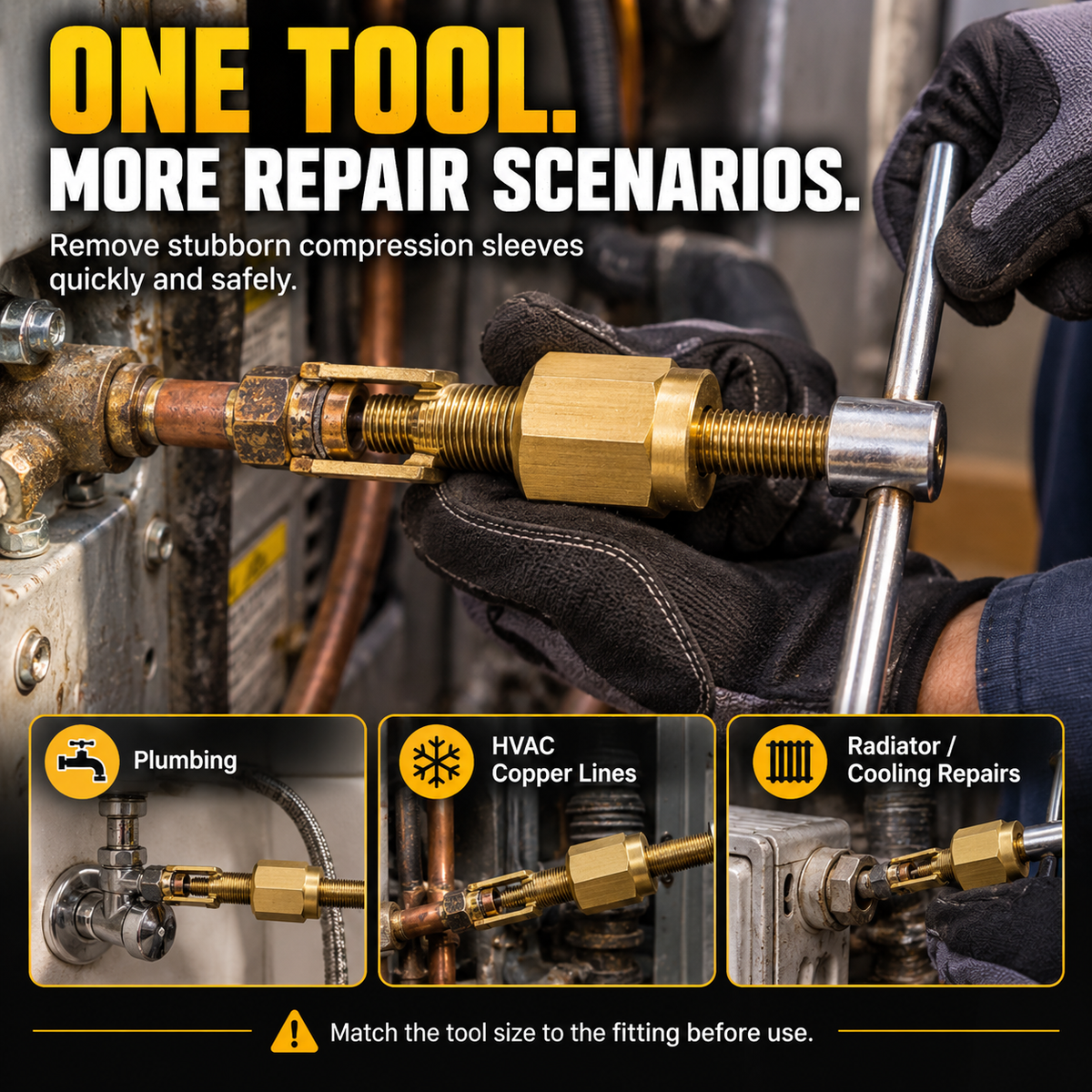
When an old compression sleeve refuses to move, don't turn one stubborn fitting into a bigger repair. Use controlled mechanical leverage to help pull the ferrule straight off the pipe.
One Stuck Ring Shouldn't Cost You More Copper.
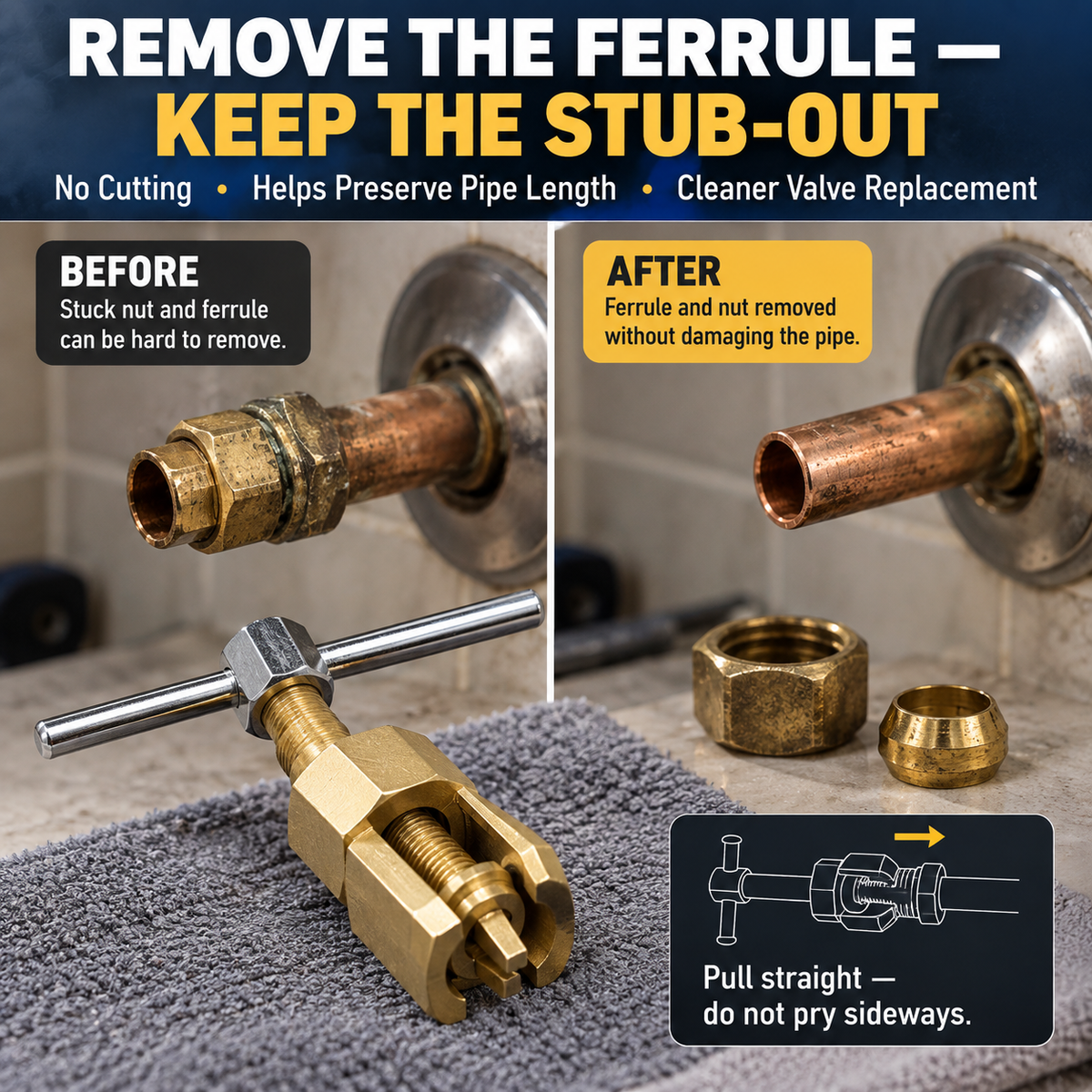
Old nuts and ferrules can lock onto a stub-out after years of use. Cutting the fitting away can also shorten the pipe you still need for the replacement valve.
This puller approaches the problem differently: pull the ferrule along the pipe instead of attacking it sideways.
Turn The Handle.
Build Straight-Line Pull.
The threaded mechanism turns your rotation into progressive pulling force. Instead of randomly prying at the fitting, the tool works in the direction the sleeve needs to move.
Insert. Thread. Turn.
Once the old fitting is accessible, the workflow is intentionally straightforward.
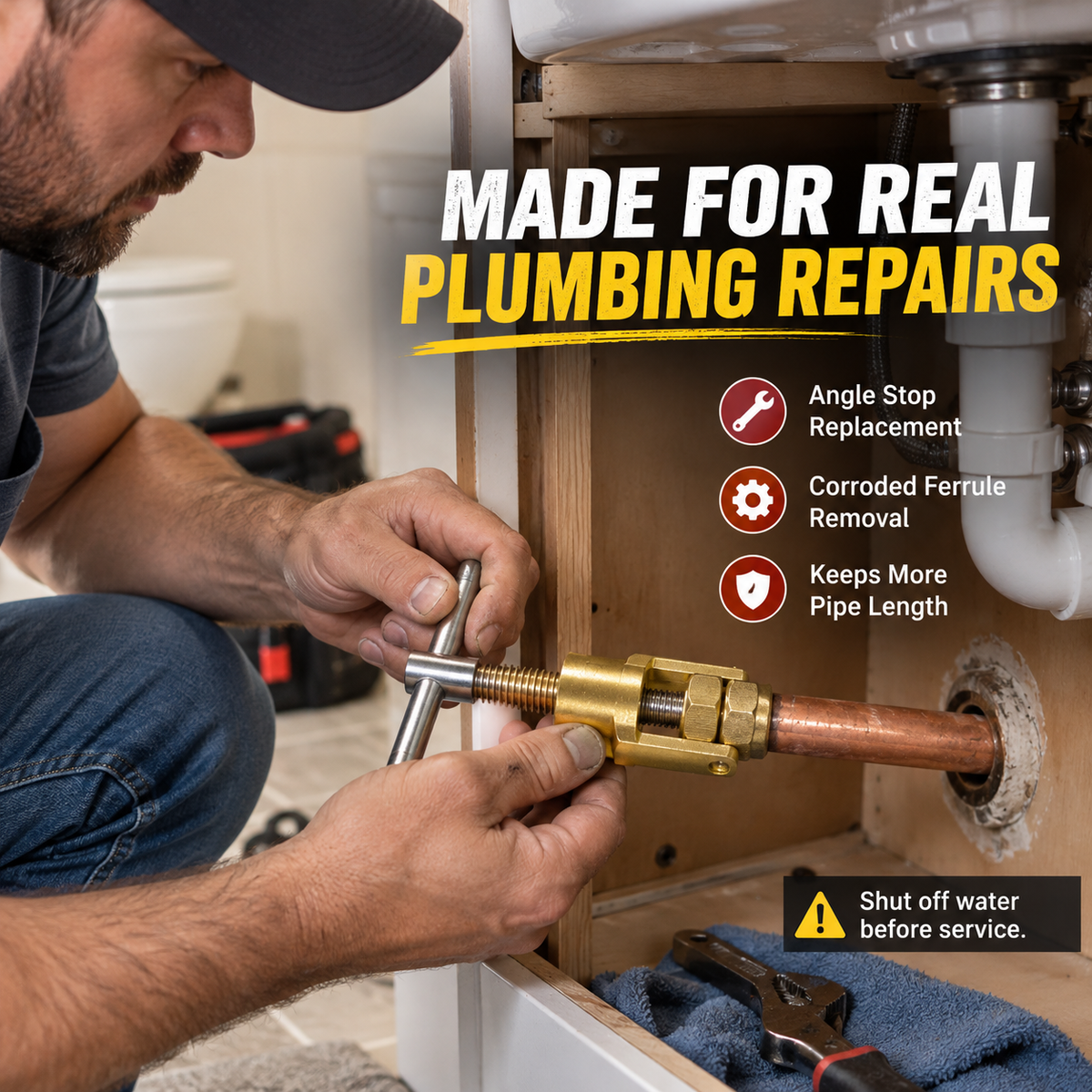
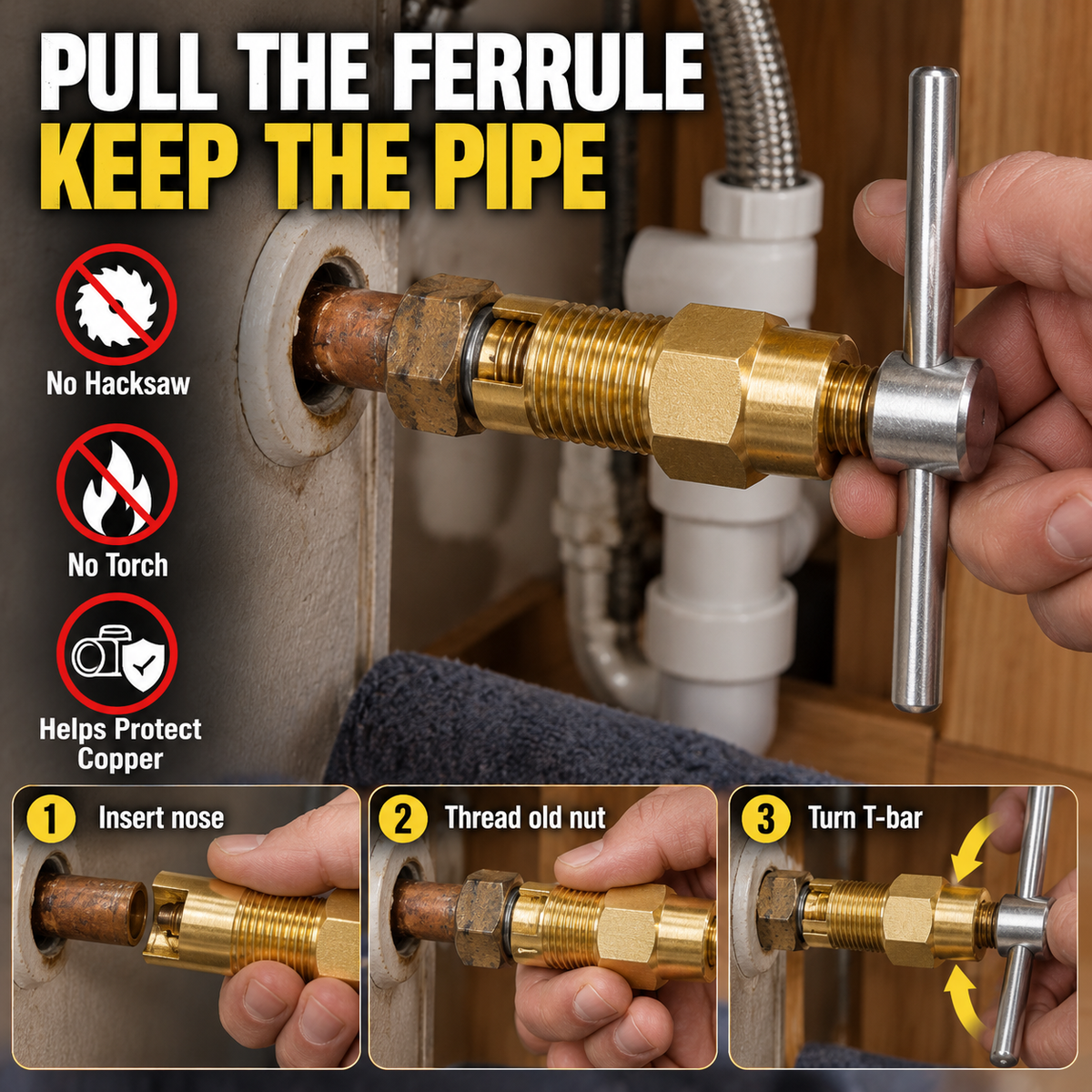
Position the puller at the exposed end of the compatible pipe.
Engage the existing compression nut with the pulling mechanism.
Rotate steadily to build pulling force and move the ferrule away.
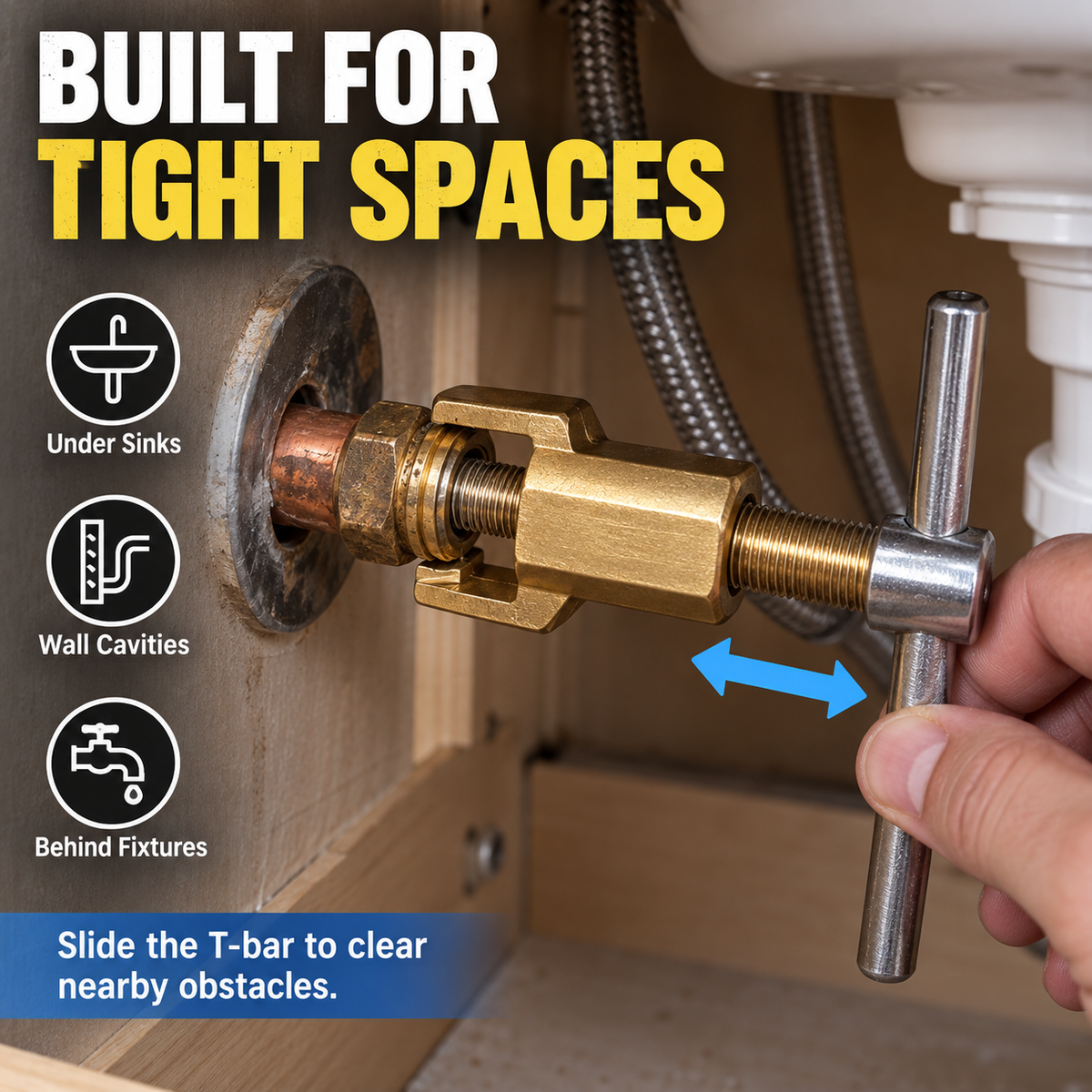
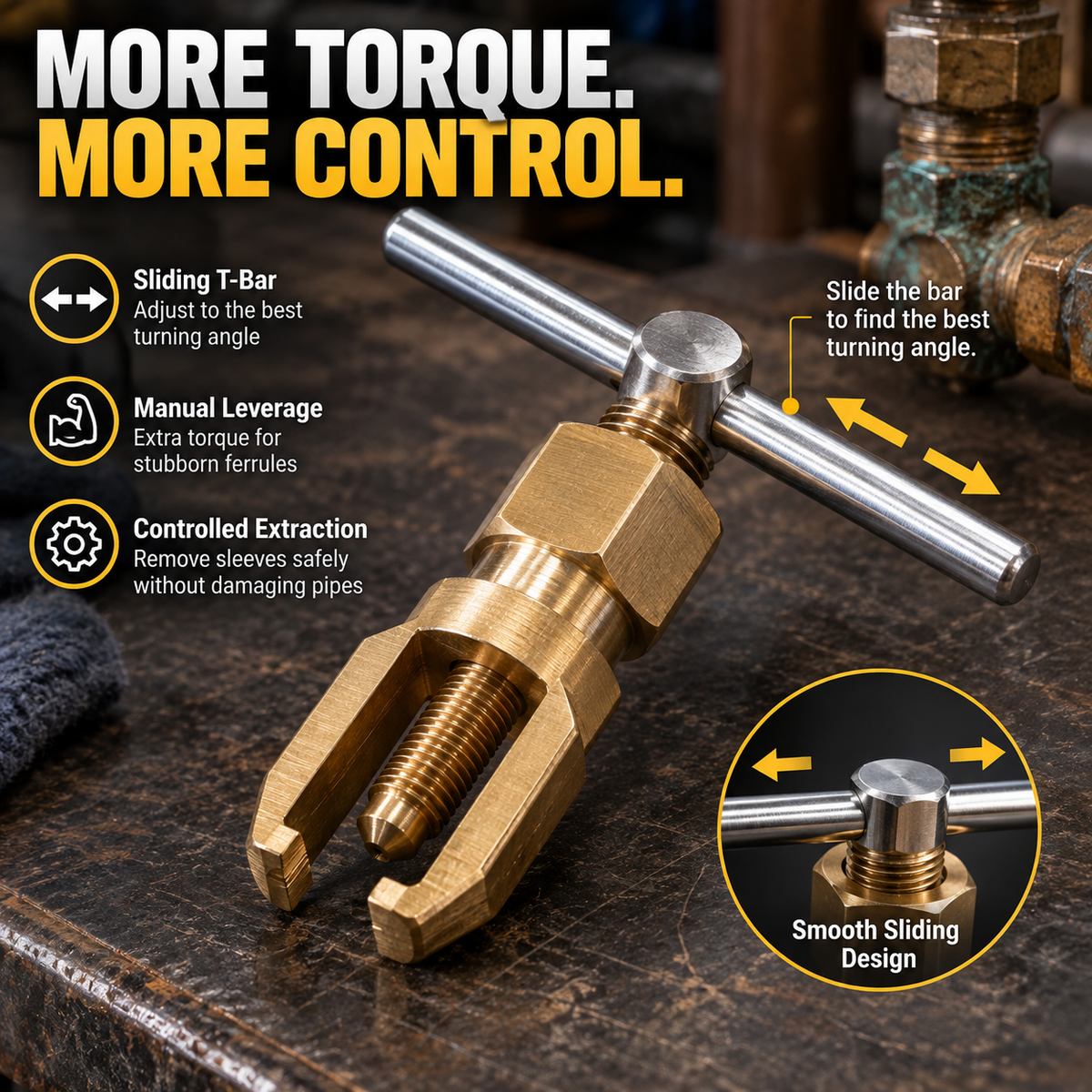
Slide The T-Bar.
Find Your Best Turning Angle.
Real plumbing jobs happen beside walls, inside vanities and behind fixtures. The sliding crossbar lets you shift your grip when one side of the handle runs into an obstacle.
That means less fighting with the workspace and more attention on the fitting you're actually trying to remove.
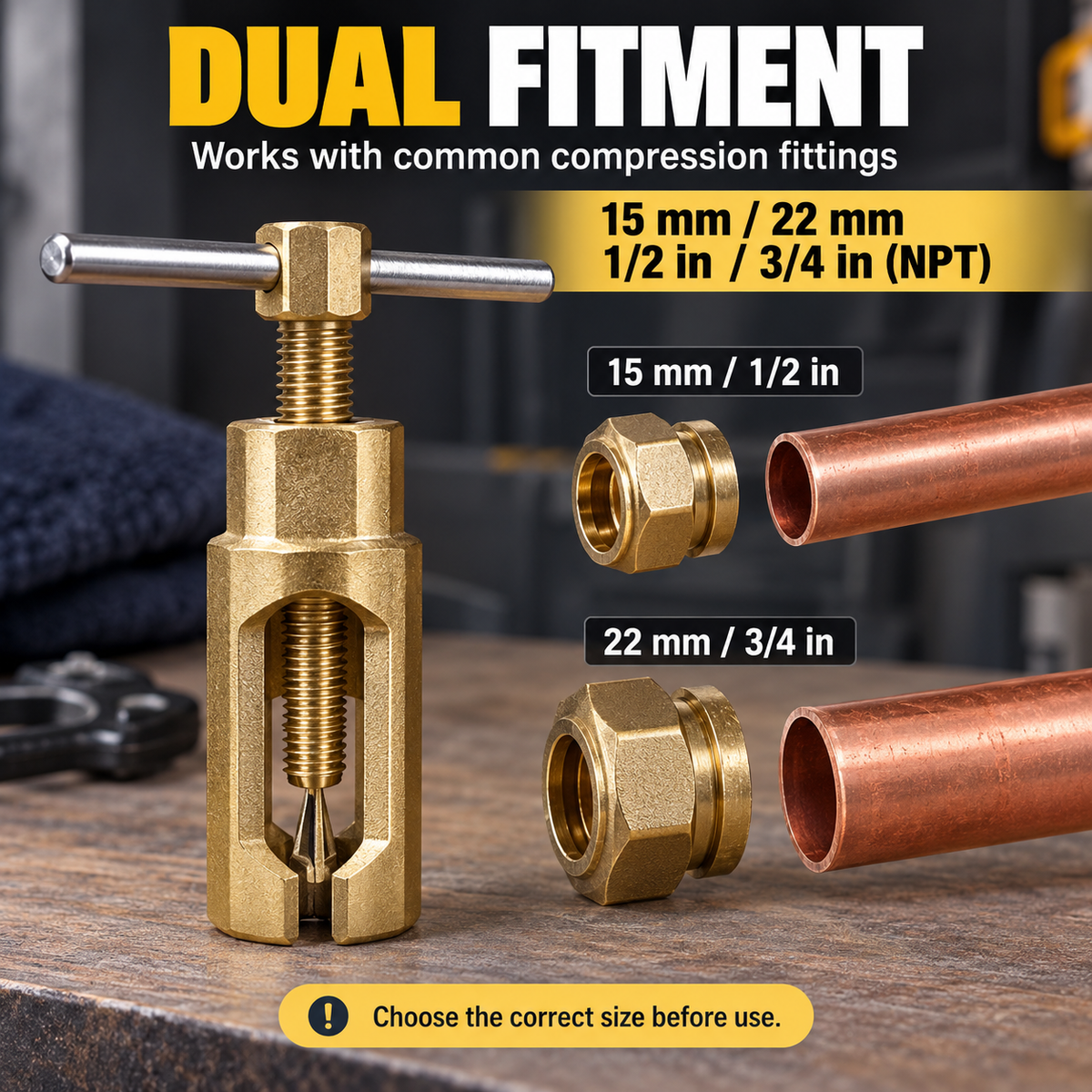
Common Compression Fitting Sizes Covered.
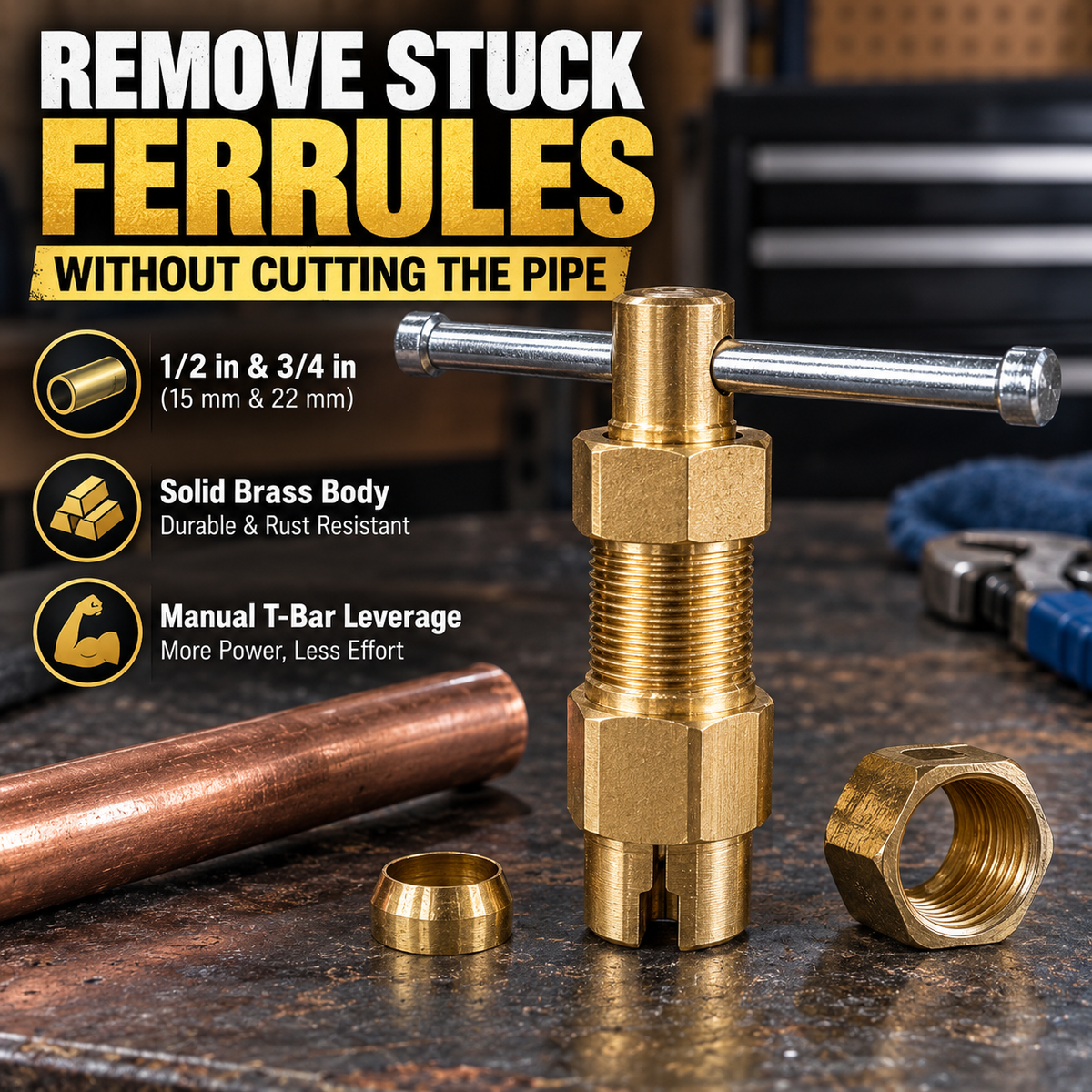
Product materials reference common 15 mm / 22 mm and 1/2 in / 3/4 in compression-fitting applications.
Always compare the tool and fitting dimensions before use, especially on older or non-standard plumbing.
One Specialized Tool.
More Than One Kind Of Job.
Keep it ready for compatible compression fittings across household plumbing, copper supply lines and other suitable service work.
A Better Fit For The Places Plumbing Actually Lives.
Under cabinets, behind sinks and next to finished walls, you usually don't have space for aggressive cutting or elaborate setups.
A compact hand-powered extraction tool gives you a more focused option when access is limited.
Puller Only Or Build Out The Repair Kit.
Choose the configuration that matches the kind of angle-stop and compression-fitting work you expect to handle.
The dedicated option when your priority is ferrule and sleeve extraction.
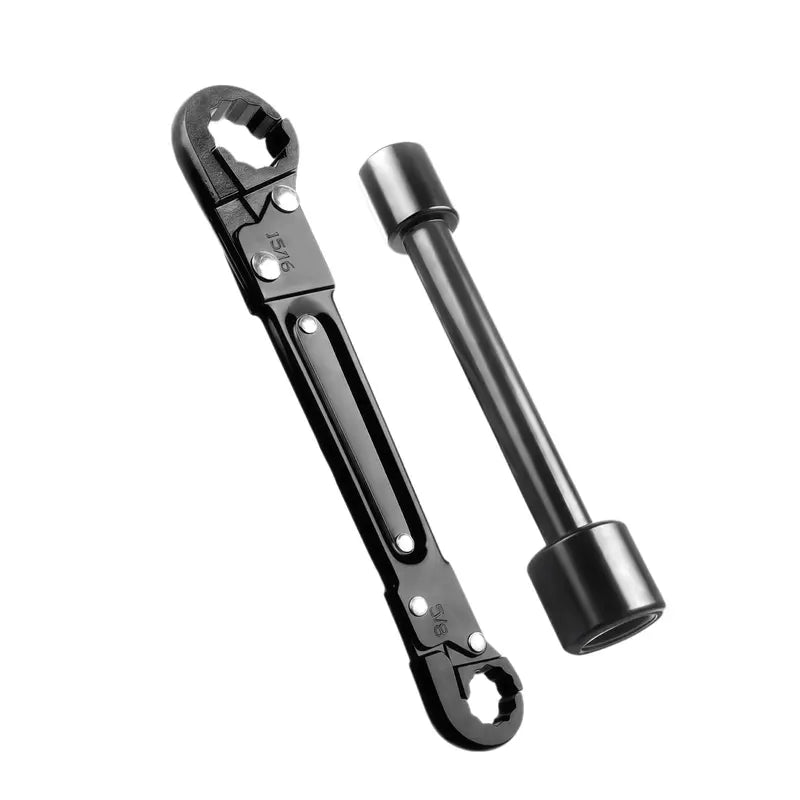
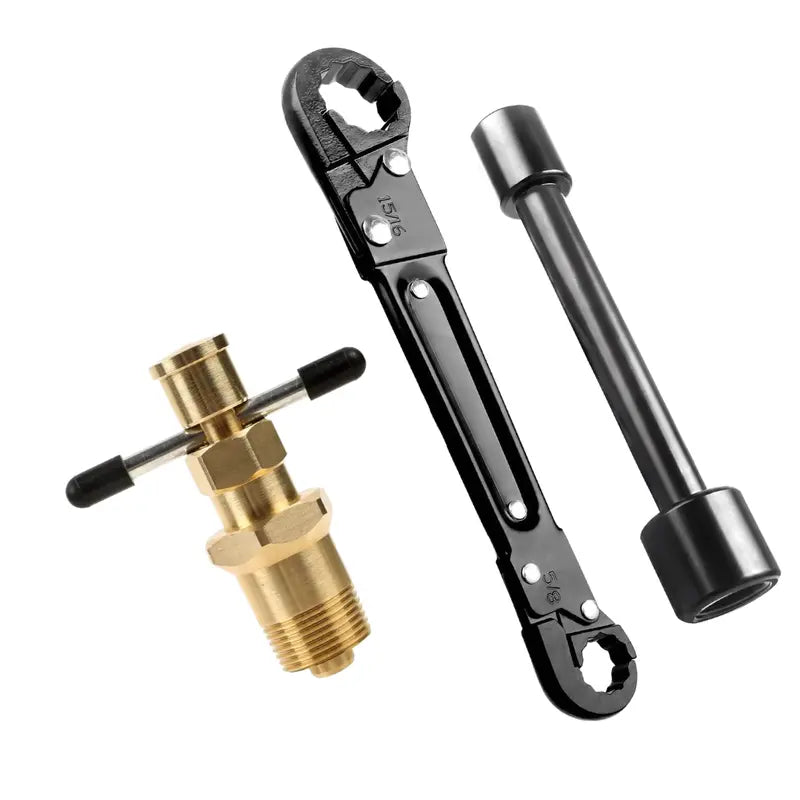
A separate wrench setup intended for compatible angle-stop service work.
Combine both tools when you want a more complete setup for common repair situations.
Built To Solve The Part Of The Repair Everyone Hates.
Designed specifically around stubborn compression sleeves, ferrules and olives.
Shift the handle position to work around nearby walls, fixtures and cabinet panels.
Rotation is converted into progressive extraction force instead of relying on aggressive side-to-side prying.
Product materials reference 15 mm / 22 mm and 1/2 in / 3/4 in fitting applications.
A compact format better suited to cabinets, walls and behind-fixture work areas.
Choose the puller, angle-stop wrench kit or the combined setup from the current product variants.
Check Your Fitting Before You Turn.
| Product Type | Compression Sleeve / Ferrule Puller Tool |
|---|---|
| Primary Purpose | Removal of compatible compression sleeves, ferrules and olives |
| Listed Size Reference | 15 mm / 22 mm |
| Imperial Reference | 1/2 in / 3/4 in |
| Operation | Manual threaded pulling mechanism |
| Handle | Sliding T-Bar |
| Available Styles | Compression Sleeve Puller Tool / Black Angle Stop Wrench Kit / Combined Tool Kit |
| Typical Applications | Angle stops, copper supply lines, plumbing and other compatible compression-fitting service work |
Know The Job. Match The Tool.
What is this tool designed to remove?
The compression sleeve puller is intended to help remove compatible compression sleeves, ferrules or olives that remain on the pipe after the fitting has been opened.
How does the puller work?
After the puller is positioned and engaged with the fitting, turning the T-bar drives the threaded mechanism and creates progressive pulling force.
Why use a puller instead of a hacksaw?
A dedicated puller gives you a way to approach the fitting with straight-line mechanical force and may help avoid unnecessary cutting of usable pipe.
What fitting sizes are shown on the product materials?
Current product materials reference 15 mm / 22 mm and 1/2 in / 3/4 in compression fitting applications. Always verify the actual fitting before use.
What is the sliding T-bar for?
It lets you change the handle position as you turn, which can make operation easier when nearby walls, cabinets or fixtures limit your available angle.
Which product option should I choose?
Choose the Compression Sleeve Puller if ferrule extraction is your main task. The current page also offers an Angle Stop Wrench Kit and a combined Puller + Wrench Kit option.
Will it remove every frozen fitting?
Removal difficulty varies with fitting type, pipe dimensions, deformation, corrosion and installation condition. Confirm compatibility first and apply force gradually.
Should the water supply be shut off first?
Yes. For plumbing service work, isolate the relevant water supply and follow appropriate repair procedures before disassembling the fitting.
Give The Stuck Ring
A Straight Way Out.
Add a purpose-built compression puller to your repair kit and tackle stubborn fittings with focused mechanical leverage instead of turning immediately to cutting and prying.
Choose Your Tool →Compatibility and removal difficulty vary by fitting dimensions, condition and installation. Confirm sizing before use and follow safe plumbing service procedures.