

🪵 MINI Viking Knot Border Carver – Decorative Woodworking Roller Tool
🪵 MINI Viking Knot Border Carver – Decorative Woodworking Roller Tool

BUNDLE & SAVE
Couldn't load pickup availability
-
Ordered
- - -
Order Ready
- - -
Delivered

🪵 MINI Viking Knot Border Carver – Decorative Woodworking Roller Tool
Roll a Repeating Viking Knot Border Straight Into the Wood.
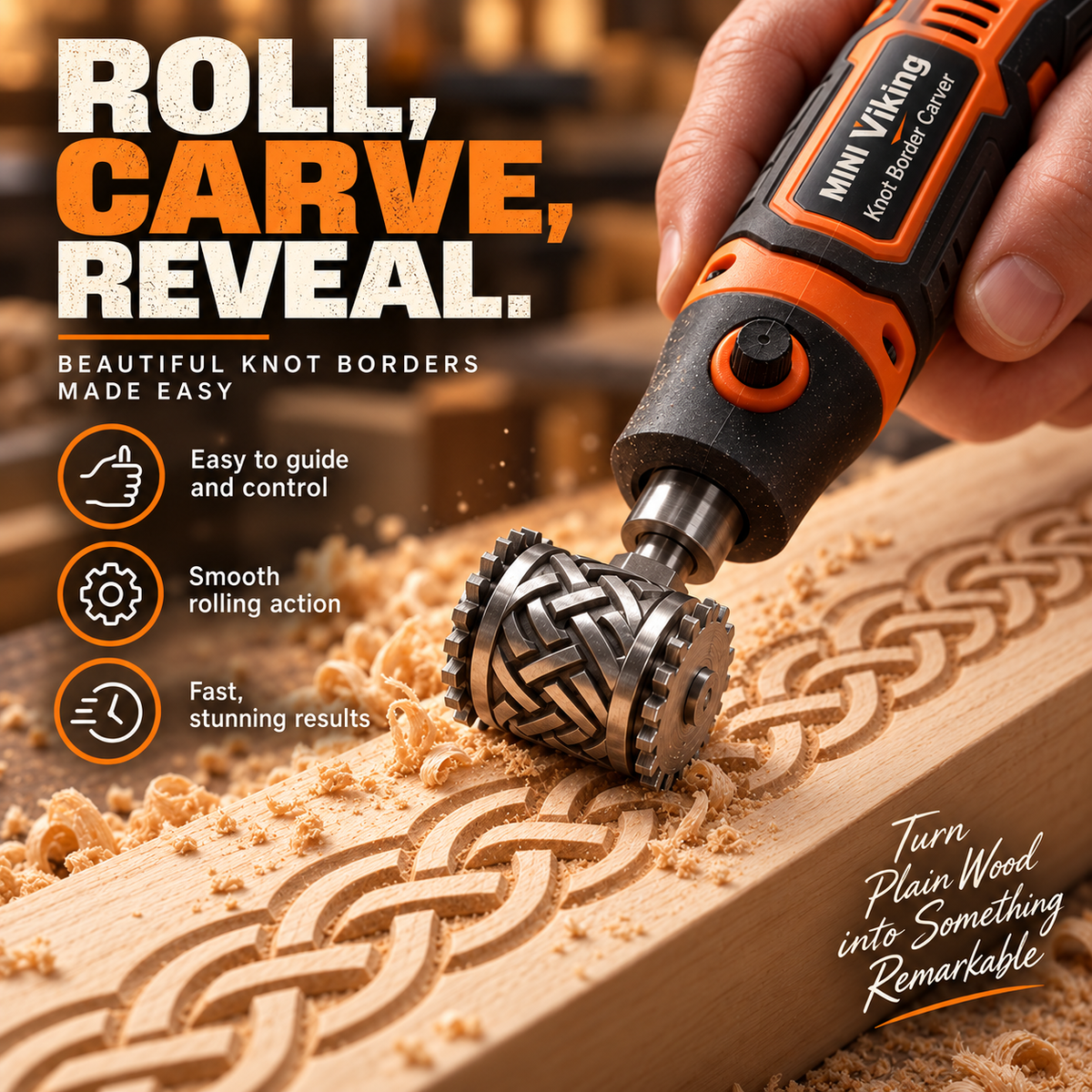
Turn plain boards into more distinctive woodworking pieces with a patterned cylindrical roller designed to carry a continuous interlaced knot motif along the edge.

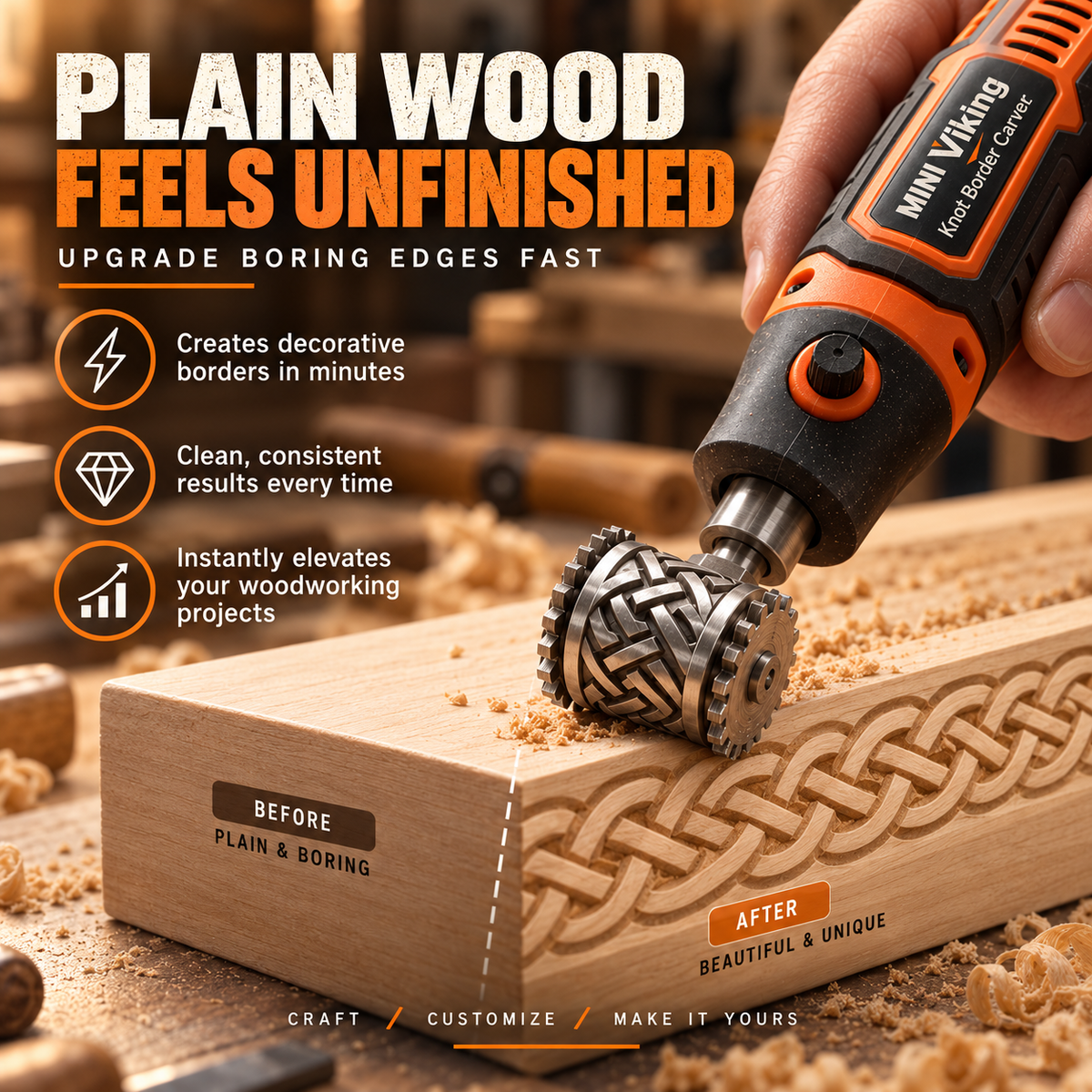
The Project Is Finished — But the Edge Still Looks Like Raw Lumber.
Decorative borders can add the character that separates a handmade project from an ordinary board. The challenge is repeating the same interlaced pattern evenly across a long edge by hand.
Drawing and carving the same decorative motif repeatedly can turn one border into a long job.
Small changes in spacing or shape become more visible as the border gets longer.
Without a distinctive detail, the edge often becomes the least memorable part of the project.
Compact Control Helps You Follow the Border Instead of Fighting the Tool.
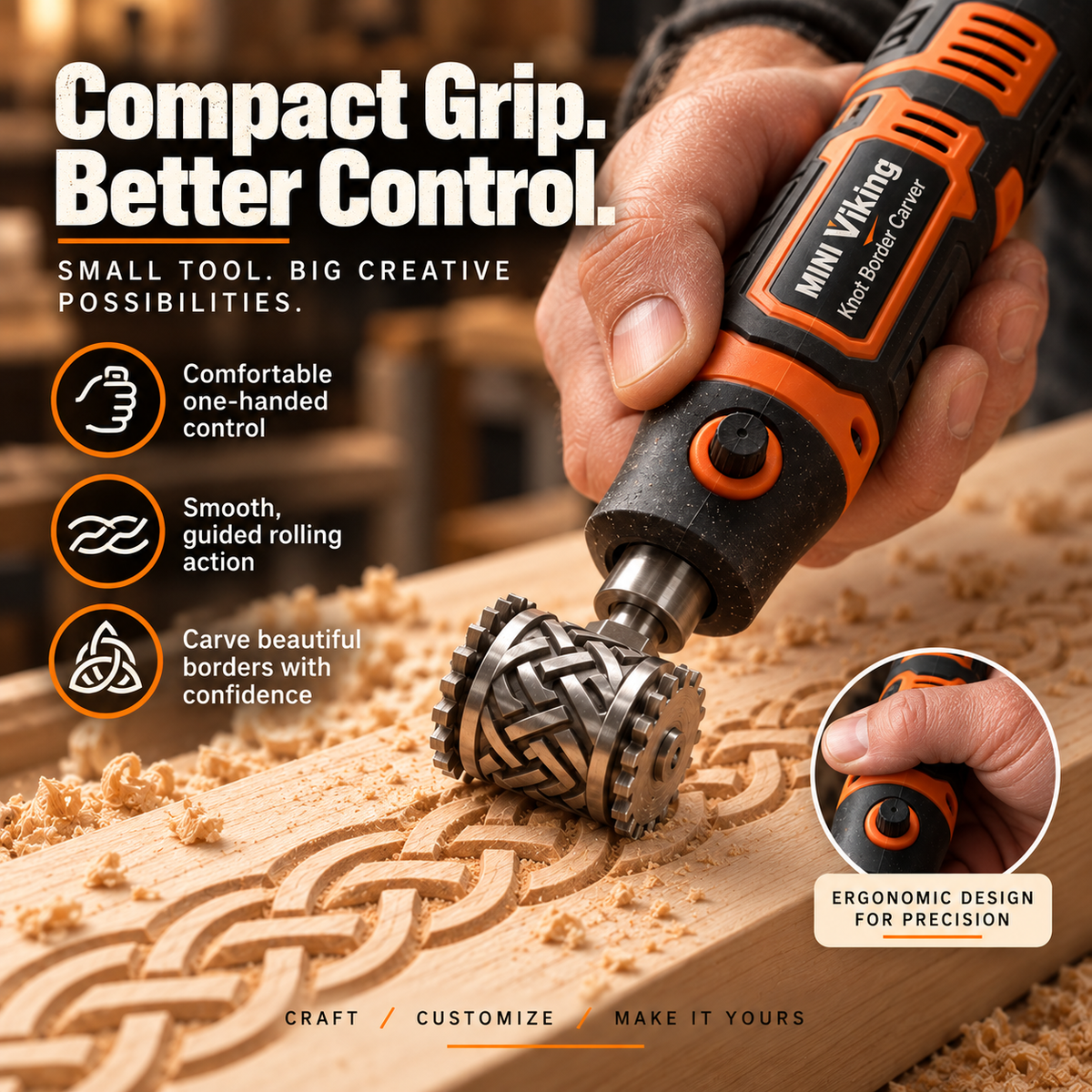
The compact body places the patterned roller near the user's hand, making it easier to concentrate on direction, pressure and keeping the motif where you want it.
A smaller working format helps the user focus directly on the border being created.
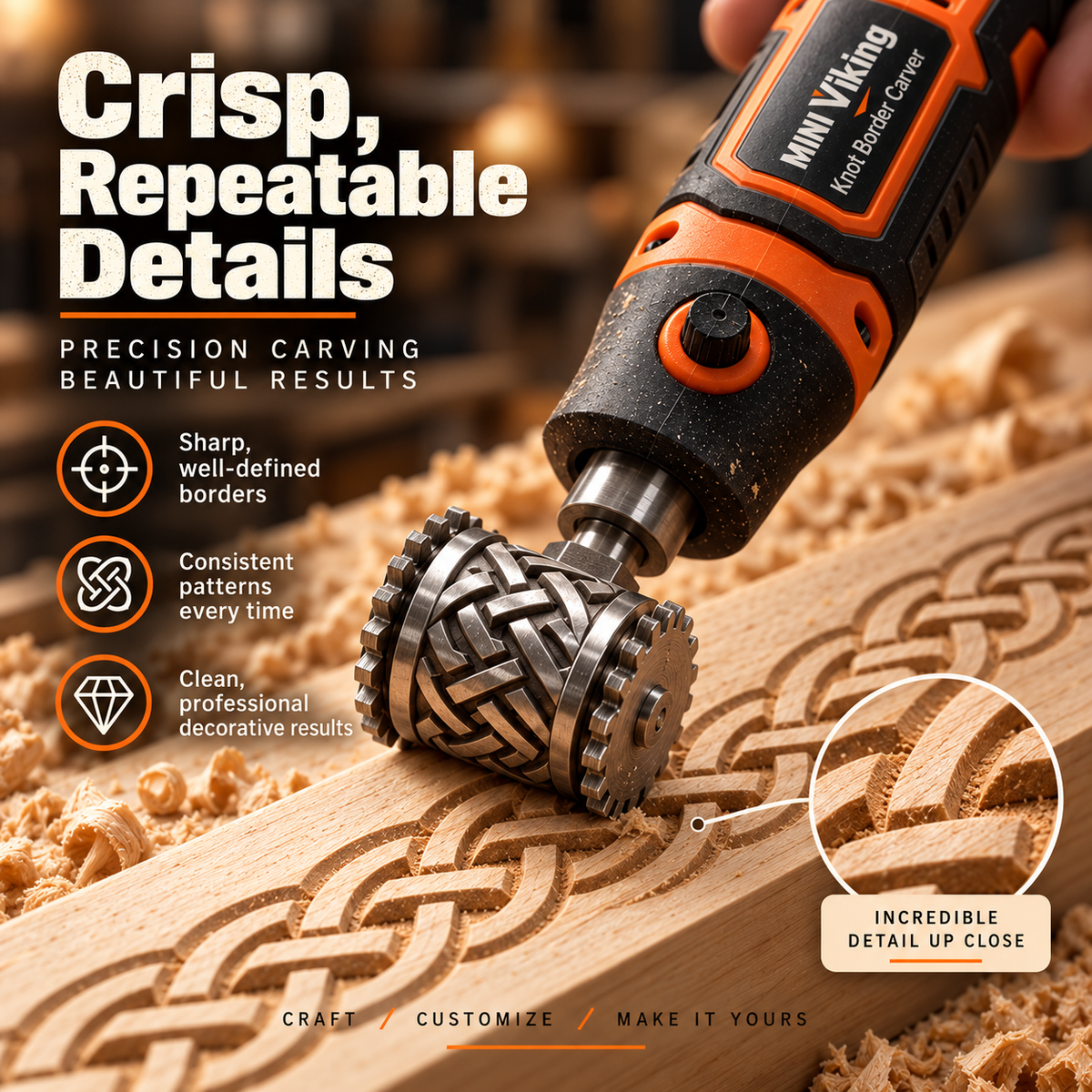
The patterned cylindrical head repeats the interlaced design as it travels along the surface.
Use a project edge or layout guide to help keep the decorative strip positioned consistently.
The product is designed around border detailing rather than general-purpose cutting.
Let the Roller Repeat the Motif While You Concentrate on the Path.
Choose the border, keep the roller guided along the workpiece and let the patterned head carry the interlaced design forward.
Select a project edge or mark a guide line before beginning the decorative pass.
Keep the tool steady and move the patterned head along the wood with controlled pressure.
Clear the wood dust and inspect the repeating knot pattern before continuing or finishing the piece.
Turn the Border Into One of the First Things People Notice.
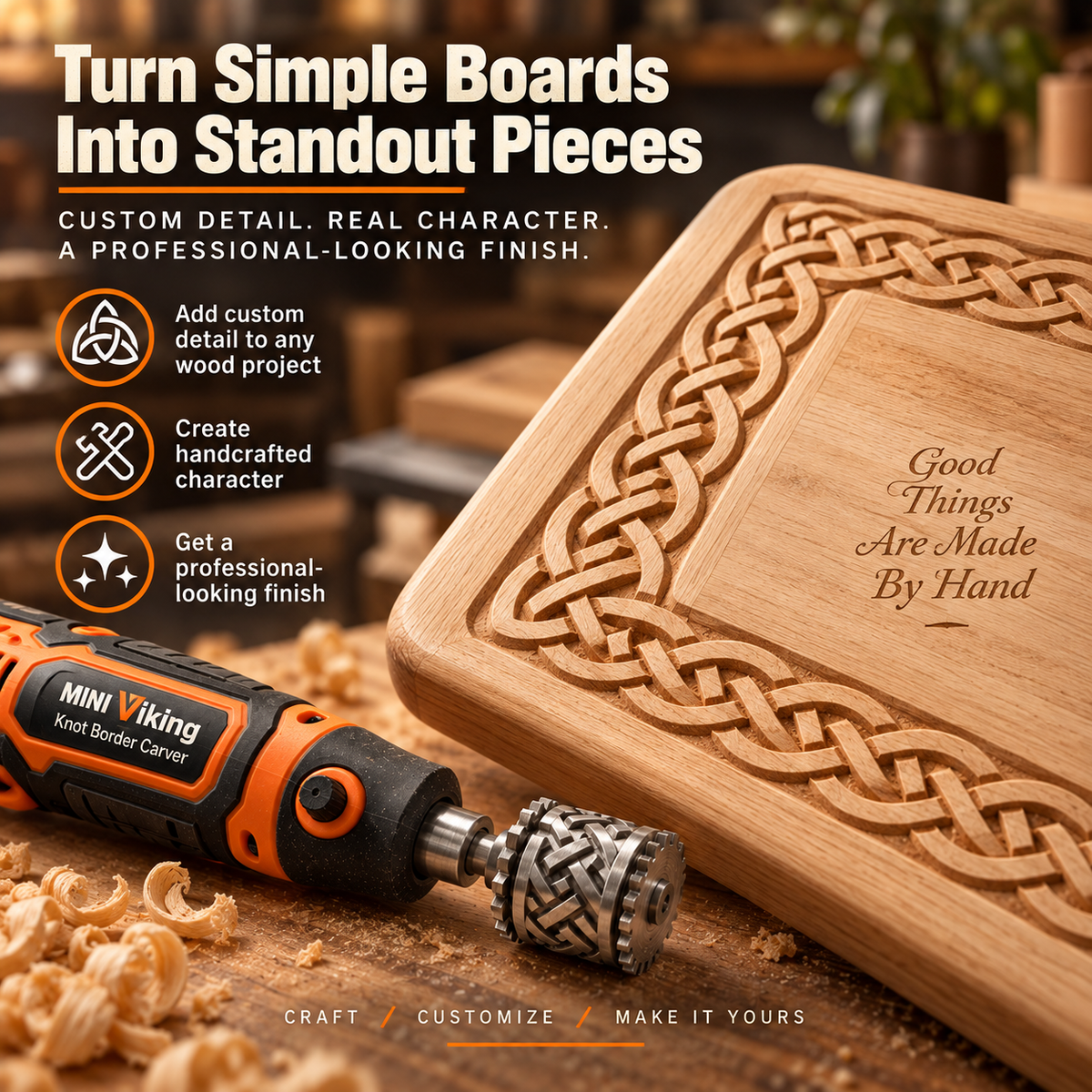
A simple board can become more distinctive when the outer edge carries a recognizable repeating pattern. That extra detail can make boxes, signs and display pieces feel more deliberately designed.
The repeating border adds another design layer without changing the main shape of the project.
The Viking / Celtic-style knot becomes a continuous decorative theme around the project.
Decorative carving can make a simple build feel more intentional and personal.
The motif can become the outside frame, a center accent or another decorative line in the build.
Use the Border Anywhere the Edge Is Part of the Finished Design.
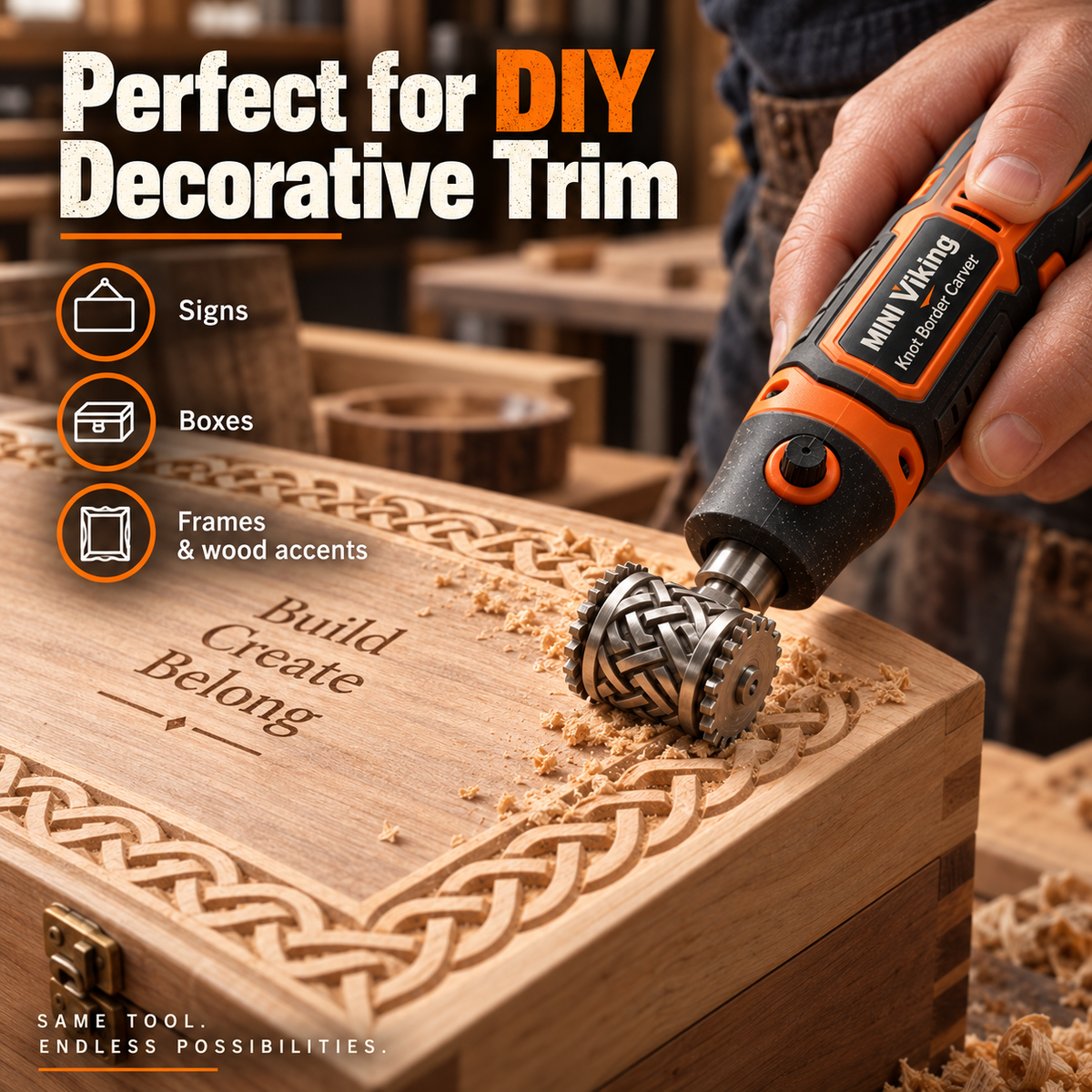
The interlaced knot works especially well on pieces where the outside edge, frame or trim remains visible after the project is finished.
Consistency Comes From Repeating the Same Roller Geometry.
Instead of redrawing every section of the knot, the patterned cylindrical metal head carries the same basic motif forward as the tool moves along the wood.
The working surface contains the repeating interlaced design.
The roller format helps carry the same design language along the border.
The carved pattern becomes more noticeable once wood dust is removed and the surface is finished.
Why Makers Reach for a Patterned Roller Instead of Drawing the Border Again.
The cylindrical roller carries the same decorative theme instead of requiring each segment to be laid out independently.
The small tool format is designed around guiding the decorative head along the workpiece.
A strong repeating border can become the signature detail of otherwise straightforward woodworking projects.
Specifications
Wood Changes. Pressure Changes. Your First Pass Should Be on Scrap.
Grain direction, wood density, surface preparation, guiding speed and pressure can all affect how the border appears. Test the setup on scrap from the same material before working on the final project.
A test piece helps you understand how the selected wood responds before committing to the finished part.
Grain direction can influence how cleanly decorative cutting progresses.
Use controlled pressure and let the working head follow the material rather than pushing aggressively.
Secure the workpiece, keep hands clear of the working head and use appropriate eye protection.
Frequently Asked Questions
What pattern does this tool create?
Do I need to carve every line separately?
What projects can I use it on?
Will it look exactly the same on every type of wood?
Should I test it before using it on my project?
Is this only useful around outside edges?
What is the working head made from?
What are the exact size and power specifications?
What is included in the package?
What safety precautions should I use?
Stop Letting the Edge Be the Most Ordinary Part of Your Woodwork.
Guide a repeating interlaced knot along signs, boxes, frames and decorative trim to give simple wood projects a stronger handcrafted-looking signature.
TURN THE BORDER INTO THE DESIGN ↑


