

🎁2026 New Arrivals💥Stainless Steel Corner Trowel – Precise Corner Finishing, Anti-Rust, Ergonomic Handle ✨
🎁2026 New Arrivals💥Stainless Steel Corner Trowel – Precise Corner Finishing, Anti-Rust, Ergonomic Handle ✨

BUNDLE & SAVE
Couldn't load pickup availability

🎁2026 New Arrivals💥Stainless Steel Corner Trowel – Precise Corner Finishing, Anti-Rust, Ergonomic Handle ✨
Stop Finishing One Side of the Corner at a Time.
Guide both wall surfaces together with a fixed 90° corner blade designed for smoother drywall compound, plaster and compatible wall-finishing passes.

Smooth One Side. Bump the Other. Fix It Again.
A flat putty knife handles flat walls well. Corners are different: two surfaces need to meet cleanly at the same line, and working them separately can create extra passes and compound buildup.
Finishing the second wall can disturb the first side you just smoothed.
Repeated correction can leave extra compound right at the joint.
Let both working faces guide the corner together during the pass.

Guide Both Sides of the Inside Corner Together.
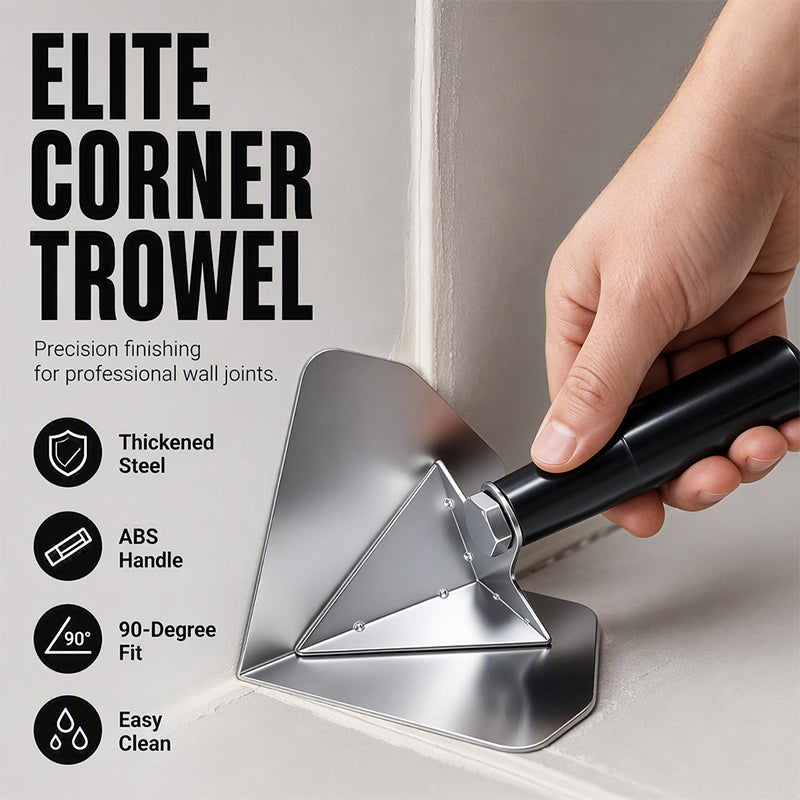
Seat the V-shaped blade into a compatible approximately 90° inside corner and use controlled passes to smooth compound across both wall faces at the same time.
Apply the appropriate drywall compound or plaster before the finishing pass.
Keep both working faces in even contact with the corner surfaces.
Let the blade shape the compound rather than forcing excessive pressure.
A fixed 90° tool helps guide the finish, but it cannot correct a badly framed or significantly out-of-square wall by itself.

Flip the Geometry for Compatible Outside Edges.
Current seller imagery also shows the trowel flipped over an outside corner to help shape and smooth compound along both adjoining faces.

Smooth Working Faces. Centered Handle. Reinforced Blade Shape.
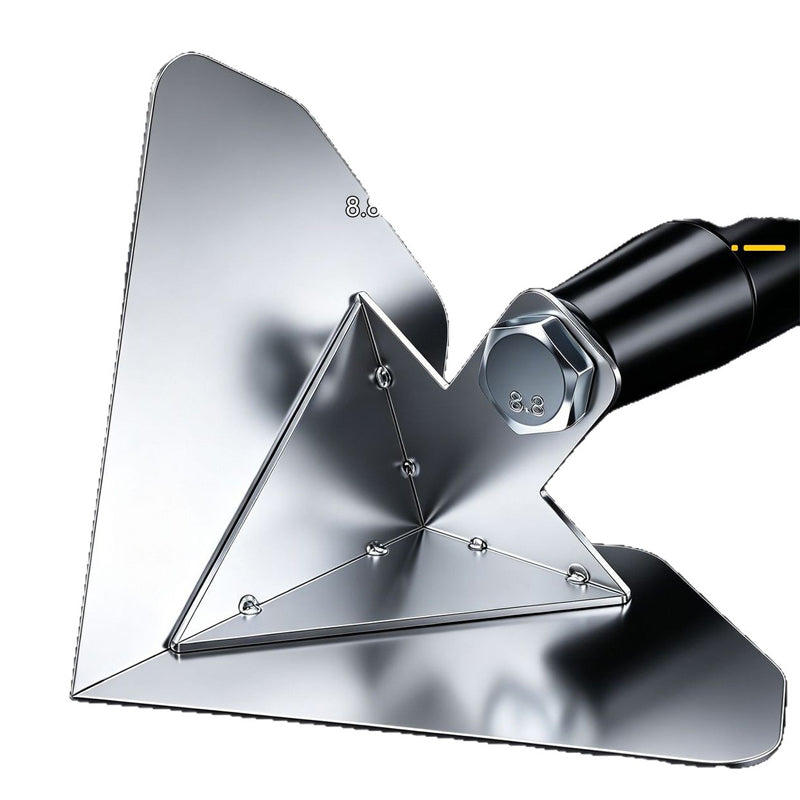
Smooth metallic working faces are designed for contact with compound and plaster.
Current product imagery shows a polished blade surface with rounded outer corners.
Current imagery shows an 8.8-marked center bolt connecting the handle assembly.

A Dedicated Handle for Better Corner Control.
The black ABS handle sits directly behind the center of the corner blade, giving the hand a defined grip while pressure is transferred toward both working faces.
The seller calls the grip non-slip and fatigue-reducing, but actual comfort depends on hand size, working time, pressure and technique.

A Smooth Blade Is Easier to Keep Smooth When You Clean It Right Away.
Rinse or wipe compatible fresh compound from the steel working surface after use, then dry the tool thoroughly before storage.

Less Guessing at the Joint. More Consistent Tool Geometry.
Instead of trying to hold a flat blade at exactly the right angle on two separate surfaces, the trowel gives you a fixed corner form to work against.
Designed around common right-angle wall intersections.
Both sides contact the adjoining surfaces during the finishing pass.
Use the same basic geometry for compatible inside or outside-corner work.
Drywall. Plaster. Patch Work. Renovation.
Why a Corner Trowel Beats Treating the Corner Like a Flat Wall.
Fixed 90° geometry helps keep the finishing pass centered on the joint.
Fit the V-shaped blade into the corner instead of alternating a flat knife between sides.
Current seller imagery also shows the blade used on outside wall edges.
Easier to wipe clean when compound is removed before it cures.
Specifications
Source consistency note: the live written specification says 0.8mm blade thickness, while one promotional comparison image says 0.75mm. This page follows the written 0.8mm specification until the fulfillment supplier confirms the exact current batch.
Good Corners Start Before the Final Trowel Pass.
Don’t Store Yesterday’s Compound on Tomorrow’s Finishing Tool.
Frequently Asked Questions
What is this trowel designed for?
It is designed to help finish approximately 90° wall corners using compatible drywall compound, plaster and similar finishing materials.
Can it be used on inside corners?
Yes. Internal wall corners are one of the main uses shown on the current product page.
Can it be used on outside corners too?
Current seller imagery also shows the tool flipped and used to shape compound along an outside corner.
Will it make every corner exactly 90 degrees?
No. The blade itself uses fixed 90° geometry, but the finished result still depends on the underlying wall, corner bead, compound thickness and application technique.
Does it make outside corners chip-proof?
No. The trowel helps shape and smooth the finishing material. Outside-corner durability depends primarily on the wall construction, corner-bead system and underlying installation.
What is the blade made from?
The current seller specification lists stainless steel. The exact stainless-steel grade is not published.
How large is the blade?
The current written specification lists approximately 175 × 96mm, or 6.89 × 3.78 inches.
How thick is the blade?
The written specification says 0.8mm, while one promotional image says 0.75mm. This page uses the written 0.8mm figure until the supplier confirms the exact current production batch.
Will stainless steel never rust?
No absolute corrosion guarantee is made. The seller recommends cleaning and drying the tool thoroughly after every use.
What comes in the package?
The current package description lists 1 × Corner Trowel.
Set the 90° Blade.
Guide Both Sides.
Finish the Corner as One Joint.
A stainless-steel corner finishing trowel with fixed 90° geometry for compatible drywall, plaster, patch and renovation work on inside and seller-shown outside corners.
Choose Your Quantity Above ↑