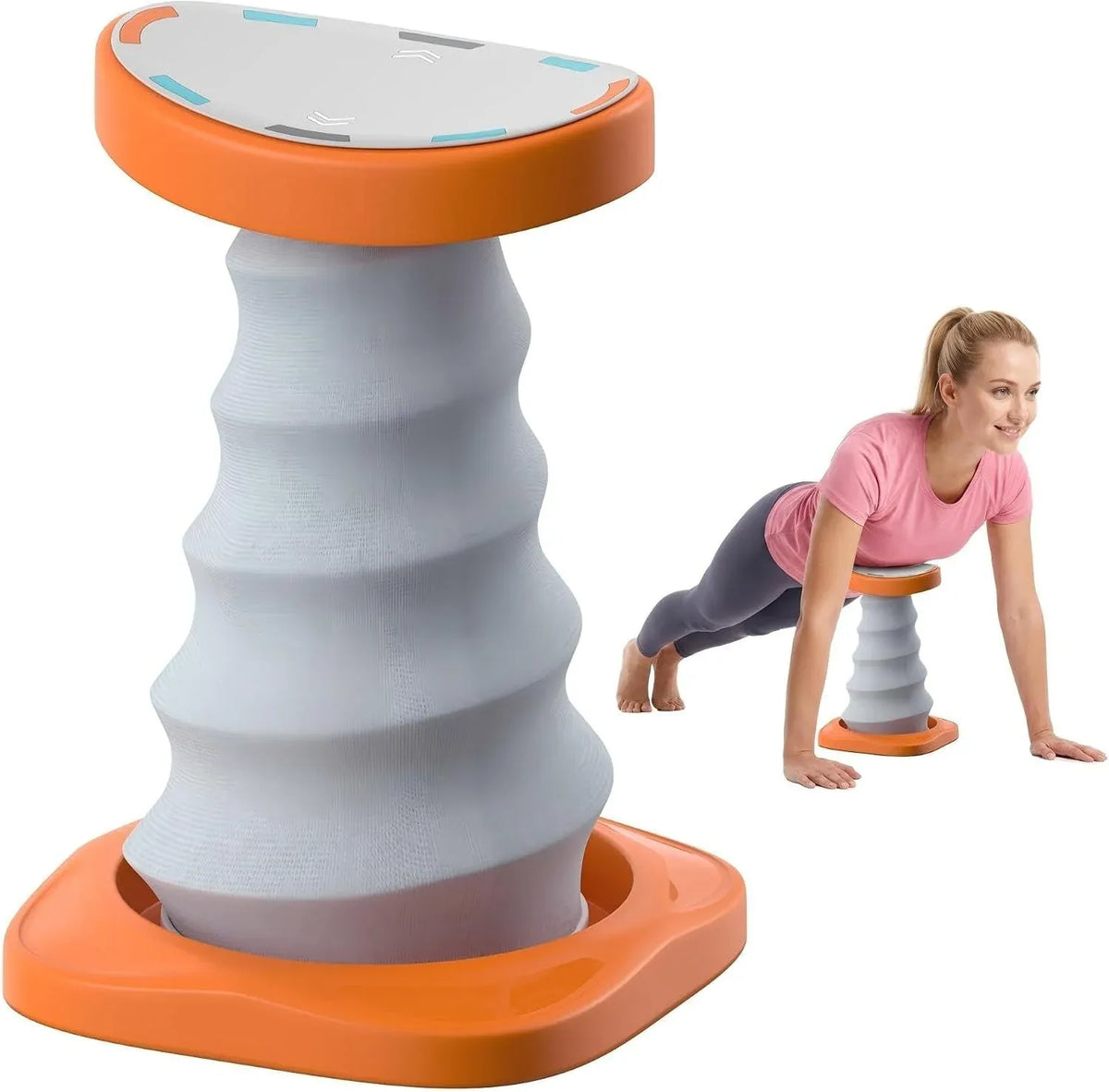
❤️Spring-Assisted Push-Up Trainer – Easier Reps, Better Form
❤️Spring-Assisted Push-Up Trainer – Easier Reps, Better Form

BUNDLE & SAVE
Couldn't load pickup availability

❤️Spring-Assisted Push-Up Trainer – Easier Reps, Better Form
Can't Do a Full Push-Up Yet? Start With a Little Support.
Everyone starts somewhere.
If regular floor push-ups feel too difficult right now, this spring-assisted trainer offers a more approachable way to practice.
The center spring supports part of your body's load while you perform controlled push-up movements.
A little assistance. More room to practice. Progress at your own pace.

Push-Ups Are Simple. That Doesn't Mean They're Easy.
A full floor push-up requires coordination and enough upper-body strength to control a substantial portion of your body weight.
When the movement feels too demanding, it can be hard to complete enough steady repetitions to build a consistent practice.

Beginners may struggle to complete full repetitions.
Fatigue can make proper movement control more challenging.

Let the Spring Support Part of the Load.
As your torso moves toward the support, the spring compresses and pushes back.
That mechanical assistance can make the movement more manageable while you still perform the push-up using your arms and upper body.
Watch How the Trainer Compresses and Supports.
This original product demonstration shows how the spring-assisted structure responds as the user moves downward and upward.

Focus on Alignment, Not Just Repetitions.
Position the trainer beneath the appropriate upper-torso support area as demonstrated by the manufacturer.
Keep your body controlled, avoid dropping your hips, and move through a comfortable range.
Start slowly. Quality practice matters more than rushing the count.


Cushioned Top. Spring Column. Stable Base.
The illustrated construction uses three main elements working together: a cushioned contact pad, a spring-assisted middle structure and a broad base.
It's designed to sit on an appropriate flat floor without the need for complex assembly.
Make Room for Repetitions You Can Control.
The goal isn't to perform the highest possible number of push-ups.
It's to practice with a level of assistance that fits your current ability, while maintaining sensible technique.

Three Steps Toward More Confident Practice.
Place the trainer on a flat, dry, non-slip surface with room to move.
Follow the supplied guide for hand and torso placement before starting.
Perform controlled assisted repetitions and stop when proper technique can no longer be maintained.
Start Assisted. Work Toward Independence.
Assisted repetitions can be one part of a gradual strength-training routine.
As your technique and upper-body strength develop, you can evaluate whether you're ready for progressively less assistance.
Progress depends on consistent practice, recovery and individual ability.

Different Starting Points. The Same Goal: Keep Practicing.
Push-up ability doesn't depend on one particular age or body shape.
Beginners with different training backgrounds may find partial support helpful as they work on the movement.

Three Colors for Your Home Workout Space.
Choose from the currently listed Gray, Blue and Orange product options.

A Simple Training Tool With a Clear Purpose.
Helps reduce the effective exercise load during assisted repetitions.
Allows beginners to work on the push-up movement with additional support.
Compact setup with cushioned contact area and textured floor base.
Everything You Need to Know Before Training.
Questions Before Your First Assisted Rep?
Is this suitable for push-up beginners?
The product is designed for users who want additional support while practicing the push-up movement. Individual suitability varies.
Does the spring do all the work?
No. The spring provides partial support, but the user still performs the movement using the upper body.
Does it really reduce load by 30–70%?
That range is advertised by the seller. No independent measurement method or test report has been verified.
Does it guarantee better push-up form?
No. Additional support may make practice more manageable, but good form also depends on correct positioning, strength and movement control.
Where should I position the trainer?
Follow the manufacturer's placement guide for upper-torso support. Avoid sensitive body areas and stop if pressure is painful.
Will it prevent wrist or shoulder pain?
No pain-relief or injury-prevention result is guaranteed. Stop if you experience pain and seek professional guidance where appropriate.
Can it support heavier users?
The seller lists a weight range of about 88–550 lb (40–250 kg). The stated range is not independently load-tested here.
Does it need assembly?
The listing states that the trainer does not require assembly.
Can I use it on hardwood or tile?
The listing illustrates home floor use. Choose a level, dry, non-slip surface, and protect delicate flooring as needed.
Can it help me progress to regular push-ups?
Assisted repetitions may be useful as one part of a gradual training routine. Progress depends on individual ability and consistent practice.
Can children use this equipment?
The source safety information advises against use by individuals under 88 lb (40 kg). Follow the manufacturer's age and safety guidance.
Who should get professional advice before use?
The original safety notice cautions against use during pregnancy, with significant waist or joint injuries, or when basic balance cannot be maintained. Consult an appropriate professional if unsure.
Start With Support. Build at Your Own Pace. 💪
A spring-assisted training tool for making push-up practice more approachable.
Choose your color, prepare your space, and take the first step toward more controlled repetitions.
Explore the Push-Up Trainer →